

AHF Full Form in Electrical Active Harmonic Filter Guide
Last updated on August 1st, 2026

What Does AHF Stand For in Electrical Engineering?
In electrical engineering, AHF stands for Active Harmonic Filter.
If your facility experiences unexplained equipment overheating, nuisance circuit breaker tripping, or excessive electrical noise, harmonic distortion is usually the hidden culprit. As power quality specialists with 30 years of manufacturing experience, we see these issues disrupt daily operations across industrial and commercial networks worldwide.
Definition of Active Harmonic Filter (AHF)
An Active Harmonic Filter (AHF) is a dynamic power electronics solution designed for real-time total harmonic distortion (THD) mitigation. Unlike legacy static compensation tools, an AHF continuously monitors the electrical grid, identifies distorted current waveforms, and instantaneously injects equal opposite-phase currents. This cancels out unwanted harmonics and restores power quality across your system.

Why Harmonic Distortion Occurs in Modern Electrical Systems
Harmonic distortion occurs when equipment draws current in non-sinusoidal pulses rather than a clean, continuous sine wave. These distorted current draw patterns interact with system impedance, corrupting the voltage waveform across the grid.
This disruption creates higher-frequency current multiples—harmonics—that lead to: Excessive heat build-up in wiring and distribution equipment Severe energy efficiency losses and utility penalty charges Premature failure of sensitive electronics and transformers
Common Sources of Harmonics

Modern automation and energy-efficient systems rely heavily on power electronics, which act as non-linear loads:
- Variable Frequency Drives (VFDs): Critical for motor speed control, but major generators of 5th and 7th order harmonics.
- Rectifiers and Converters: Fundamental components in industrial power supplies, EV chargers, and DC drives.
- UPS Systems: Essential backup power sources in data centers and healthcare facilities that generate continuous harmonic feedback.
- Commercial Non-Linear Loads: Large LED lighting networks, switched-mode power supplies (SMPS), computers, and arc welding equipment.
Active Harmonic Filter Working Principle
An active harmonic filter works much like noise-canceling headphones for your electrical system. Instead of relying on fixed capacitors and reactors to trap specific frequencies, it constantly monitors system distortion and injects counter-currents to restore a clean sine wave instantly.
Here is how our Active Harmonic Filter technology cleans up power in real time:
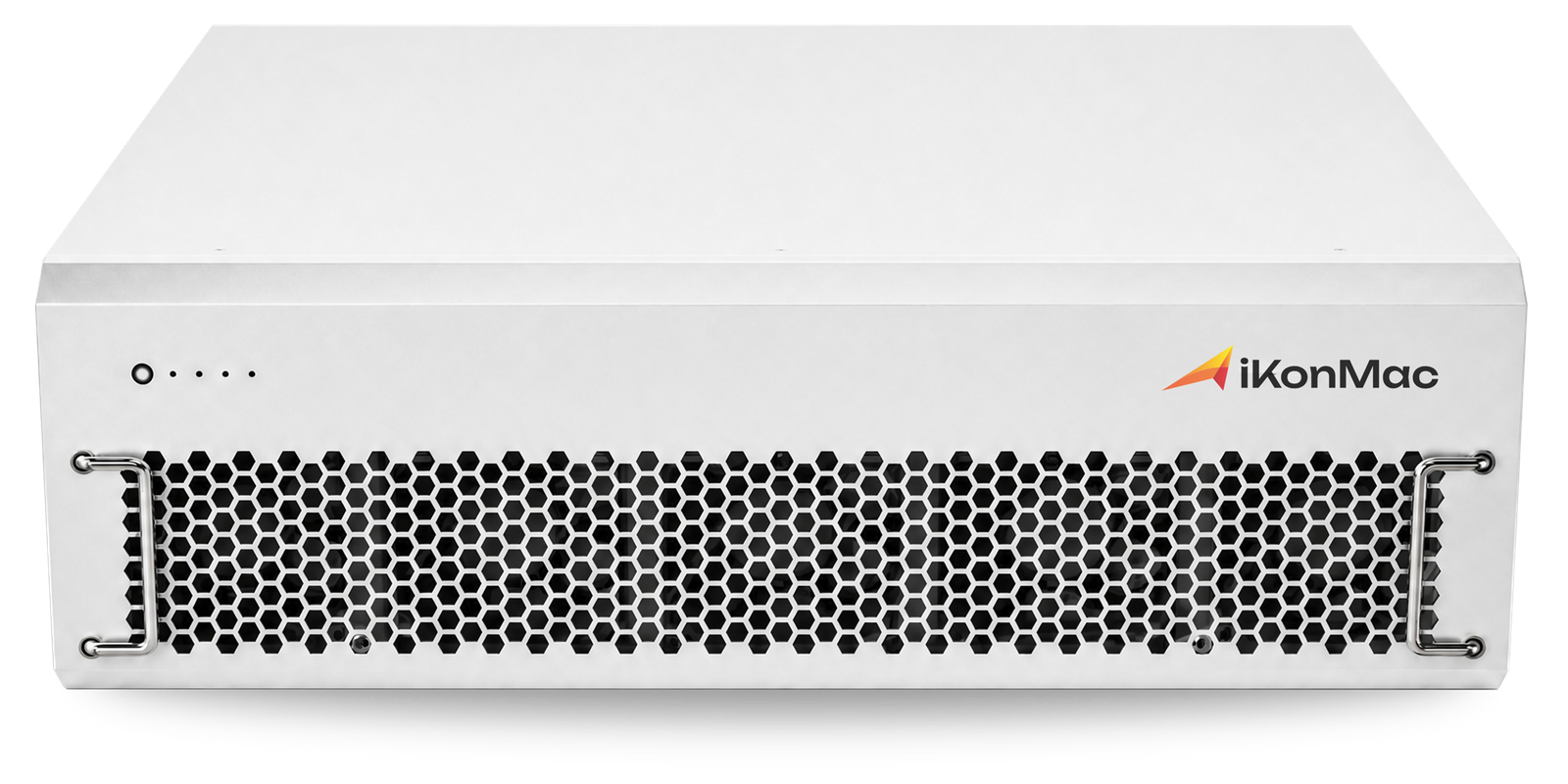
ACTIVE HARMONIC FILTER

1. Real-Time Current Monitoring and Signal Detection
- Continuous sensing: Current transformers (CTs) track the load current drawn by non-linear equipment in real time.
- Fast processing: Digital signal processors (DSPs) isolate dirty harmonic frequencies from the fundamental 50/60 Hz power wave within microseconds.
2. Opposite-Phase Current Generation via IGBTs
- Precision switching: An advanced IGBT active power filter inverter synthesizes precise counter-harmonic currents.
- Phase inversion: The system generates a current signal that matches the harmonic amplitude exactly but shifted 180 degrees out of phase.
3. Dynamic Cancellation of Harmonics
- Instant neutralization: The injected opposite-phase current cancels unwanted noise right at the point of load connection.
- Adaptive response: As load conditions shift, the unit delivers dynamic reactive power compensation across all phases, handling up to the 50th harmonic order without risk of system resonance.
Key Benefits of Installing an Active Harmonic Filter (AHF)

When non-linear loads distort your system, installing an active harmonic filter—the complete full form of AHF in electrical power quality management—delivers immediate operational relief and financial returns. Over our 30 years specializing in power quality products, we have engineered these solutions to tackle harmonic distortion at the root, ensuring your grid runs clean and efficient.
Here is how an AHF transforms your electrical system:
- Drastic THD Reduction: An active power filter continuously monitors the line and neutralizes unwanted harmonics, slashing Total Harmonic Distortion (THD) from hazardous double-digit levels down to under 5%.
- Full IEEE 519 Compliance: It keeps your facility fully compliant with IEEE 519 electrical standards, avoiding utility non-compliance fines. Explore our verified Quality Certifications and Standards to see how our design principles meet strict international grid requirements.
- Equipment Protection: Eliminating harmonic currents stops transformer overheating, extends insulation life, prevents cable degradation, and eliminates random false tripping of circuit breakers.
- Power Factor Correction & Lower Utility Bills: An AHF delivers dynamic reactive power compensation alongside harmonic filtering. This boosts your overall power factor, eliminates utility low-power-factor penalties, and frees up transformer capacity.
Operational Impact of AHF Mitigation
| Benefit Area | Technical Impact | Operational Outcome |
|---|---|---|
| Harmonic Mitigation | Reduces THD to < 5% | Stops costly equipment downtime |
| Thermal Relief | Eliminates excessive eddy currents | Prevents transformer and cable burnout |
| Grid Stability | Smooths current waveforms | Prevents false breaker trips and system resets |
| Financial ROI | Corrects power factor (> 0.97) | Eliminates utility penalties and cuts energy waste |
We have deployed these units across complex Industrial Power Quality Projects, giving facility owners total control over their power quality and significant long-term savings.
Active vs Passive Harmonic Filter: Key Differences
Choosing between an Active Harmonic Filter (AHF) and a passive filter comes down to how your facility operates. With 30 years of manufacturing power quality products, we have seen facilities struggle with passive filters when electrical loads shift. Here is how both technologies compare in real-world applications.
Dynamic Response to Changing Loads
- Active Harmonic Filter: An AHF monitors your power network in real time and adapts instantaneously. Whether your variable frequency drives (VFDs) run at 20% or 100% capacity, the AHF dynamically adjusts counter-currents to cancel harmonics without risking system resonance.
- Passive Filter: Passive filters rely on fixed LC circuits tuned to specific frequencies (such as the 5th or 7th harmonic). They work fine under static, constant loads, but fail to maintain performance when operating conditions fluctuate.
Filtering Spectrum and Compensation Capabilities
- Broadband Mitigation: An IGBT active power filter targets a wide spectrum of harmonics—from the 2nd up to the 50th order—simultaneously.
- Selective Filtering: Passive systems only target specific, pre-tuned harmonic orders. Eliminating multiple frequencies requires installing several bulky passive units.
- Power Factor Correction: Beyond total harmonic distortion (THD) mitigation, an AHF delivers dynamic reactive power compensation, correcting leading and lagging power factors on the fly.
Footprint and Installation Efficiency
- Space-Saving Design: Modern AHFs offer high power density in a compact, modular enclosure. They integrate easily into tight electrical rooms or existing switchgear panels.
- Bulky Components: Passive filters rely on heavy inductors and large capacitor banks, taking up valuable floor space and complicating retrofit projects.
Cost Considerations and Long-Term ROI
While passive filters have a lower initial purchase price, an Active Harmonic Filter delivers superior long-term return on investment. An AHF protects your electrical infrastructure against equipment overheating, prevents utility power factor penalties, and scales effortlessly as your facility grows.

| Feature | Active Harmonic Filter (AHF) | Passive Harmonic Filter |
|---|---|---|
| Load Adaptability | Real-time, dynamic tuning | Fixed performance for steady loads |
| Harmonic Coverage | Comprehensive (2nd to 50th order) | Limited to single tuned frequencies |
| Resonance Risk | None | High risk of grid resonance |
| Physical Size | Compact, modular design | Heavy, large footprint |
| Power Factor Control | Stepless, dynamic compensation | Fixed reactive injection |
| Long-Term ROI | High ROI via energy efficiency and low maintenance | Lower initial cost, limited flexibility |
Common Industrial and Commercial Applications of AHF
When dealing with non-linear load harmonic compensation, power demands vary heavily by industry. Over our 30 years of manufacturing reliable power quality products, we have seen how harmonic distortion damages equipment across different sectors. Installing an active harmonic filter (AHF)—the full form in electrical engineering standing for Active Harmonic Filter—delivers targeted power quality improvement where facilities need it most.

Manufacturing Plants with Variable Frequency Drives (VFDs)
Modern production facilities rely heavily on automated drives, but variable frequency drive harmonics are a leading cause of line distortion.
- The Issue: Drive-created harmonics cause motor overheating, premature insulation breakdown, and unexplained PLC control glitches.
- The AHF Fix: Integrating a 3-phase active harmonic filter at the main switchboard cancels drive-induced harmonics instantly, protecting equipment and stabilizing production lines.
Data Centers and Facilities Powered by UPS Systems
Data infrastructure requires absolute reliability, yet continuous server loads generate significant harmonic current.
- The Issue: Large uninterruptible power supply (UPS) systems and non-linear power supplies heat up neutral conductors and stress backup equipment.
- The AHF Fix: Active harmonic filters continuously monitor and clean distorted power currents, ensuring total reliability and preventing unexpected downtime.
Solar Farms and Renewable Energy Installations
Grid tie-in points require clean AC power injection from solar and wind inverters.
- The Issue: Solar and wind inverters inject high-frequency harmonics into the utility grid, risking severe grid compliance penalties.
- The AHF Fix: Dynamic AHF compensation actively cleans power output, ensuring total compliance with utility grid standards under fluctuating weather conditions.
Commercial High-Rise Buildings and Healthcare Facilities
Modern commercial sites run complex electrical networks feeding HVAC systems, elevators, LED arrays, and sensitive medical devices.
- The Issue: Dirty power leads to false circuit breaker tripping, overheating transformers, and interference with delicate medical tools like MRI machines.
- The AHF Fix: Compact AHF units deliver targeted filtering across commercial distribution panels, isolating sensitive electronics from noisy mechanical loads.
How to Select and Size the Right Active Harmonic Filter
Getting the right Active Harmonic Filter (AHF) setup comes down to precise system evaluation. Oversizing wastes capital, while undersizing leaves your facility exposed to high Total Harmonic Distortion (THD). With 30 years of manufacturing power quality products, we recommend this practical step-by-step approach to selection and sizing.

Conduct a Comprehensive Power Quality Audit
Before purchasing equipment, capture exact operational data from your electrical system: Log baseline data: Attach a calibrated power quality analyzer at the main service entrance or target distribution panels. Capture peak cycles: Measure voltage and current harmonics across a full operating cycle to track load fluctuations from variable frequency drives (VFDs) and non-linear equipment. Identify specific harmonic orders: Pinpoint dominant harmonics (such as 5th, 7th, 11th, and 13th) driving total distortion.
Calculate Total Harmonic Compensation Current
An AHF injects opposite-phase current to cancel out harmonic waves in real time. To determine the required AHF current rating in Amperes (A):
- Measure full load RMS current (I_rms) under peak operating conditions.
- Measure Total Current Harmonic Distortion (THDi) as a percentage.
- Calculate compensation current (I_ahf): Multiply full load current by THDi percentage (I_ahf = I_rms × THDi).
- Add safety margin: Add a 20% buffer to account for system expansion and temporary current spikes.
Select 3-Wire vs. 4-Wire System Configuration
The physical wiring setup depends on whether your electrical network uses a neutral conductor and supports single-phase non-linear loads.
| Feature | 3-Wire AHF System | 4-Wire AHF System |
|---|---|---|
| System Connection | 3 Phase Lines (L1, L2, L3) | 3 Phase Lines + Neutral (L1, L2, L3, N) |
| Best Used For | Pure 3-phase industrial loads (VFDs, motors, pumps) | Commercial buildings, data centers, medical facilities |
| Neutral Harmonic Filtering | No neutral line connection | Actively neutralizes 3rd (triplen) harmonics on neutral |
| Load Profile | Balanced 3-phase non-linear loads | Unbalanced loads with significant single-phase equipment |
Evaluate Response Time, Modularity, and Expansion Options
- Fast Response Time: Select an AHF equipped with advanced IGBT technology that delivers sub-millisecond control response (under 5 ms total correction time) for rapidly changing loads.
- Modular Design: Rack-mounted, modular units allow power modules to operate in parallel. This design lets you install only what you need now and add capacity as facility loads grow.
- Multi-Function Control: Ensure your selected AHF can perform simultaneous power factor correction and dynamic reactive power compensation alongside harmonic filtering.
Frequently Asked Questions About AHF Full Form in Electrical Systems
What is the AHF full form in electrical engineering?
The AHF full form in electrical systems stands for Active Harmonic Filter. It is an advanced power quality management solution designed to detect and eliminate dynamic harmonic distortion caused by non-linear loads in real time.
What is the main difference between AHF and APFC?
While both devices target power quality improvement, they solve fundamentally different problems:
| Feature | Active Harmonic Filter (AHF) | Automatic Power Factor Correction (APFC) |
|---|---|---|
| Primary Goal | Total harmonic distortion (THD) mitigation | Displacement power factor correction |
| Technology | Fast IGBT-based power electronics | Capacitor bank dynamic switching |
| Response Time | Ultra-fast dynamic response (< 5 ms) | Slower stepped switching (seconds) |
| Resonance Risk | Zero risk of network resonance | High risk of harmonic resonance |
Can an AHF correct power factor alongside harmonics?
Yes. Modern 3-phase active harmonic filter units perform multi-function compensation simultaneously: Dynamic harmonic mitigation up to the 50th order. Step-less power factor correction (both inductive and capacitive). Real-time load balancing across all three phases.
How does an AHF improve overall energy efficiency?
By continuously cleaning up your electrical network, our AHF systems boost efficiency by: Cutting cable heating: Eliminates skin-effect energy losses in power lines. Reducing transformer stress: Lowers eddy current and stray load losses. Avoiding utility penalties: Keeps your total harmonic distortion well within IEEE 519 compliance limits.
Is an Active Harmonic Filter safe for generator backup systems?
Yes, completely. Traditional passive capacitor banks often cause voltage hunting or leading power factor tripping on backup generators. An active power filter dynamically adjusts its output current to match generator capacity without overcompensating or destabilizing the backup power source.